
THE PROPER USE OF SCIENCE IS NOT A CONQUER A NATURE BUT TO LIVE IN IT
~BARRY COMMONER~
sustainable development
The strategic issues addressed within the scope of P2M (Research and Community Service / Penelitian dan Pengabdian pada Masyarakat) are global warming and climate change. The occurrence of global warming demands a paradigm shift in development programs and compels us to implement a more environmentally friendly concept known as Sustainable Development.
The most widely accepted concept of Sustainable Development is The Brundtland Definition, which emphasizes “development that meets present needs without compromising the ability of future generations to meet their own needs.” The 1992 Rio de Janeiro Declaration adopted this definition and introduced the concept of three dimensions, recognizing that Sustainable Development is a balance among dimensions: Environmental Protection Sustainable, Economic Growth Sustainable, and Social Development Sustainable.
At Petra Christian University, all three dimensions are applied sustainably to support the preservation of the environment.
Research Focus
ENVIRONMENTAL PROTECTION SUSTAINABILITY
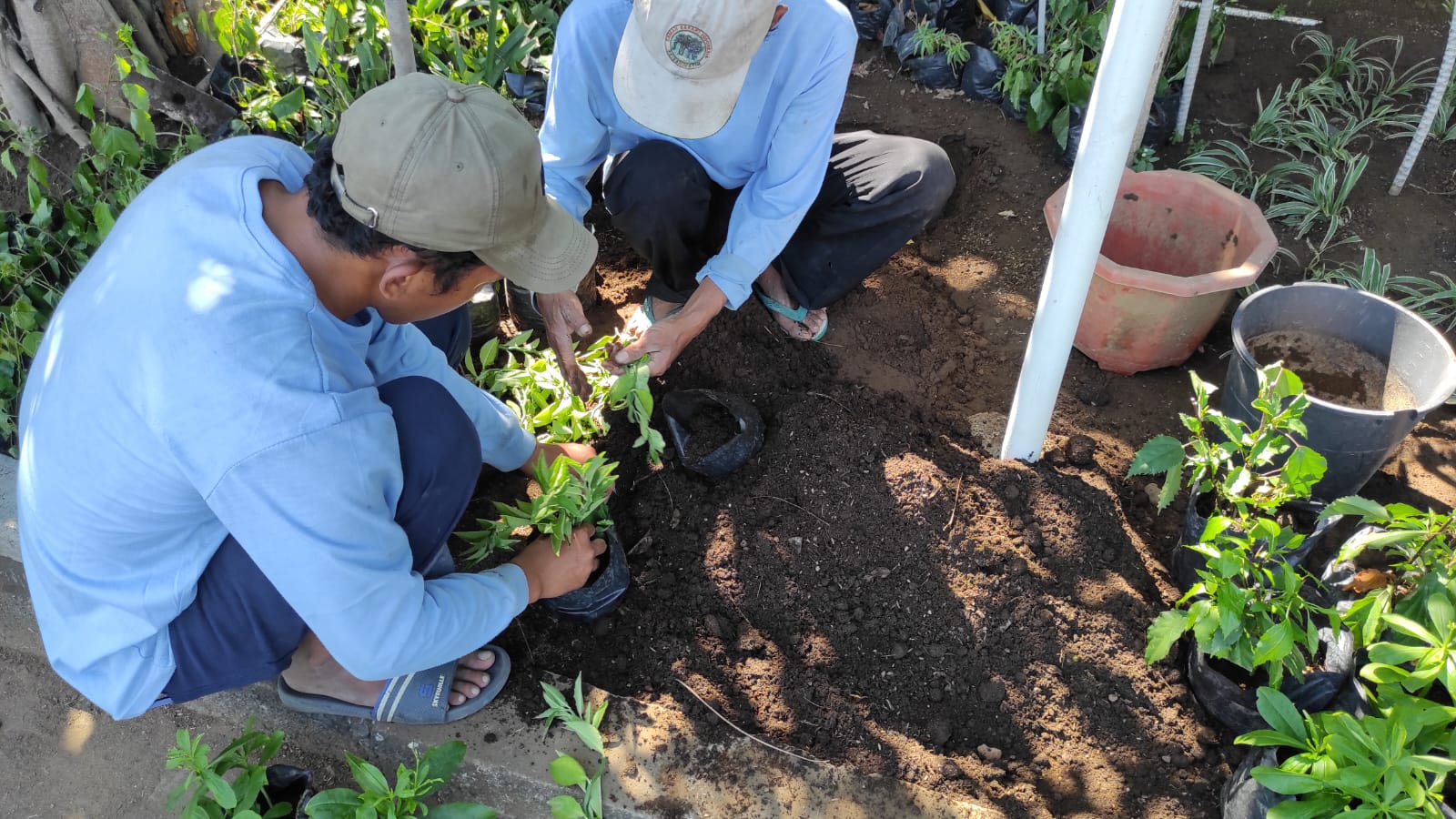
Activities in this scope are conducted in conjunction with research to preserve the environment and meet the current generation's needs without sacrificing the needs of future generations. The research is focused on renewable energy, energy conservation, green buildings, and carbon emission reduction.
During G20 meetings, the issue of climate change also receives significant attention. It is addressed in various working groups. One of the G20 working groups that extensively discussed climate-related issues was the Climate Sustainability Working Group (CSWG). G20 member countries also emphasized the application of sustainable principles in addressing climate change.
ECONOMIC GROWTH SUSTAINABILITY
In a recent speech before the United Nations General Assembly, the President of the Republic of Indonesia, Ir. Joko Widodo, emphasized the importance of empowering developing nations to drive technological innovation and build a sustainable global economy. The economic landscape has shifted from the era of industrial economy to the era of information, and now, it is transitioning towards the creative economy era.
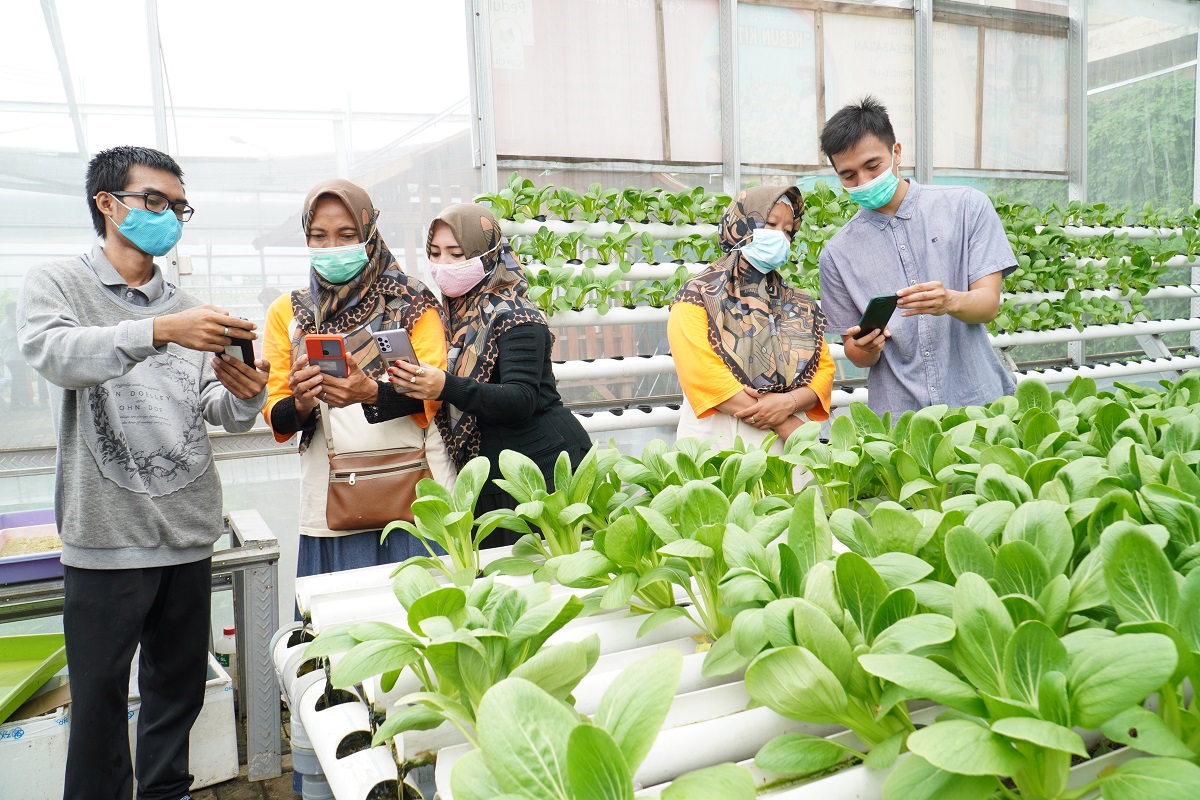
The most crucial aspect of the creative economy is the power of ideas transformed into economic value. Unlike natural resources that deplete over time with prolonged exploration, creative ideas are boundless, and their value tends to increase over time. The new economic era intensifies information and creativity, relying on ideas and the stock of knowledge from human resources as the primary factors of production in economic activities. Consequently, research is focused on developing the creative industrial economy, green supply chains, environmentally friendly production, procurement, and packaging design that can generate Economic Growth Sustainability.
SOCIAL SUSTAINABILITY DEVELOPMENT
Indonesia, as an archipelagic nation, boasts a rich cultural diversity among its various ethnic and tribal groups. However, conflicts based on race, ethnicity, and religion that persist in certain regions serve as evidence that cultural tolerance is not yet fully realized, internalized, and practiced by society.
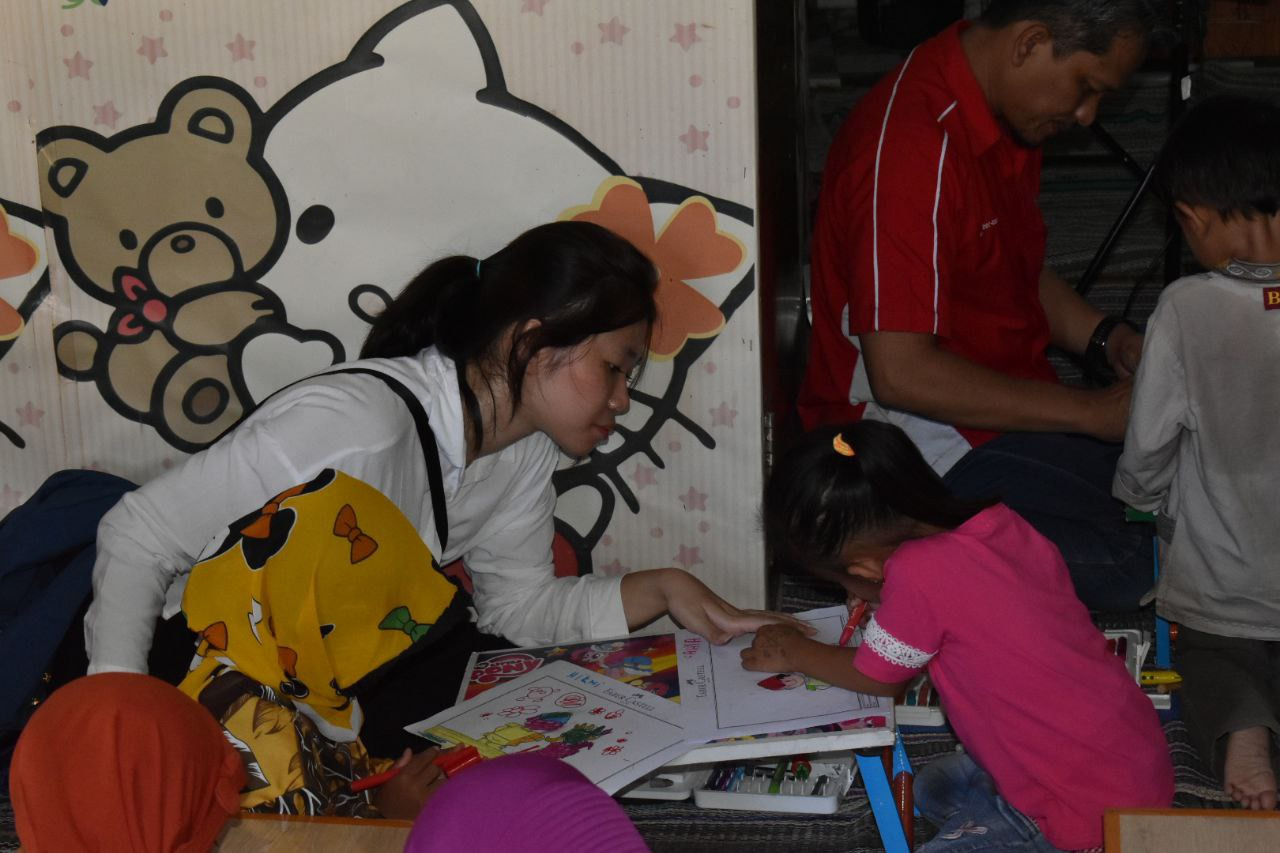
Culture is an inseparable aspect of human life. It is not only integral to human existence, but humans themselves cannot endure life without culture. Culture is formed through the long journey of a nation's life and history. At Petra Christian University (PCU), the fields of Culture and Society are among the key areas of focus in the Research and Community Engagement (P2M) program, to address issues related to gender equality, combating social problems such as racism, advancing education, and fostering peace within the community.
Publication
- Anggono, J., Budiarto, b., Sugondo, S., Purwaningsih, H., & Antoni. (2020). The Strength of Polylactic Acid Composites Reinforced with Sugarcane Bagasse and Rice Husk. Materials Science Forum, 1000, 193-199.
- Anggono, W., Suprianto, F. D., Gotama, G. J., Evander, J., & Kasrun, A. W. (2018). Investigation on biomass briquette from Cerbera manghas waste twigs as renewable energy source. ARPN Journal of Engineering and Applied Sciences, 13(3), 1080–1084.
- Anggono, W., Sutrisno, Suprianto, F. D., & Evander, J. (2017). Biomass briquette investigation from pterocarpus indicus leaves waste as an alternative renewable energy. IOP Conference Series: Materials Science and Engineering, 241(1), 012043. https://doi.org/10.1088/1757-899X/241/1/012043
- Antoni, Adi, N., Kurinawan, M.E., Agraputra, A. Teopilus, D., Pudjisuryadi, P., Chandra, J., & Hardjito, D. (2023). The influence of viscosity-modifying agent and calcium carbonate on 3D printing mortar characteristics. IOP Conference Series: Earth and Environmental Science, 1195, 012021, 8th International Conference of Euro Asia Civil Engineering Forum 2022 (EACEF-2022) 03/10/2022 – 12/10/2022 Rapperswil, Switzerland and Yogyakarta, Indonesia.
- Antoni, Christian, D., Wibowo, A.R.K., Chandra, J., Pudjisuryadi, P., & Hardjito, D. (2023). Using Calcium Oxide and Accelerator to Control the Initial Setting Time of Mortar in 3D Concrete Printing. Lecture Notes in Civil Engineering, 215,1-10, The 5th International Conference on Sustainable Civil Engineering Structures and Construction Materials (SCESCM 2020)
- Antoni, Purwantoro, A.A.T., suyanto, W.S.P.D., & Hardjito, D. Fresh and Hardened (2019). Properties of High Calcium Fly Ash-Based Geopolymer Matrix with High Dosage of Borax. Iranian Journal of Science and Technology, Transactions of Civil Engineering, 44, 535-543.
- Budhi, G.S., He, L., Chiong, R., Li, W., & Zhang, Y. (2022). A multiobjective evolutionary algorithm for achieving energy efficiency in production environments integrated with multiple automated guided vehicles. Knowledge-Based Systems, 243, 108315, 1-24
- Kristanto, L., Sugiharto, H., Agus, S. W. D., & Pratama, S. A. (2017). Calcium Silicate Board as Wall-facade. 171, 679–688. https://doi.org/10.1016/j.proeng.2017.01.409
- Kristanto, L., Widigdo, W., Nata, S. H., & Jusuf, S. K. (2020). Impacts of partial greenery facade to indoor light illuminance and thermal. 490(1). https://doi.org/10.1088/1755-1315/490/1/012010
- Mintorogo, D. S., Budhiyanto, A., Elsiana, F., & Suprianto, F. D. (2022). Harvesting renewable energies through innovative kinetic honeycomb architectural facades: The mathematical & CFD modeling for wind turbine design optimization. Journal of Asian Architecture and Building Engineering, 21(6), 2593–2604. https://doi.org/10.1080/13467581.2021.2007102
- Mintorogo, D. S., Elsiana, F., & Budhiyanto, A. (2020). Effect of Tilt Angle of Building-Integrated Wind Turbine and Photovoltaic Façade on Wind Pressure and Solar Radiation. 520(1). https://doi.org/10.1088/1755-1315/520/1/012016
- Mintorogo, D. S., Widigdo, W. K., & Juniwati, A. (2017). Remarkable 3-in-1 pakis-stem green roofs for saving thermal flat rooftop. Advanced Science Letters, 23(7), 6173–6178. https://doi.org/10.1166/asl.2017.9230
- Prayogo, D., Wijaya, D., Santoso, D.I., Gunawan, T., & Widjaja, J.A. (2019). Optimizing Prediction Accuracy of Concrete Mixture Behavior Using Hybrid K-means Clustering and Ensemble Machine Learning, The 5th International Conference on Sustainable Infrastructure (ICSI 2022)
- Tanoto, Y., & Handoyo, E. A. (2015). Renewable energy potential for sustainable long-term electricity energy planning: A bottom-up model application. International Journal of Renewable Energy Research, 5(3), 919–925.
- Tanoto, Y., & Wijaya, M. E. (2011). Economic and environmental emissions analysis in Indonesian electricity expansion planning: Low-rank coal and geothermal energy utilization scenarios. 177–181. https://doi.org/10.1109/CET.2011.6041459
- Tanoto, Y., Bruce, A., MacGill, I., & Haghdadi, N. (2019). Impact of High Variable Renewable Penetrations on Dynamic Operating Reserves in Future Indonesian Electricity Industry Scenarios. Proceedings – 2019 IEEE International Conference on Environment and Electrical Engineering and 2019 IEEE Industrial and Commercial Power Systems Europe, EEEIC/I and CPS Europe 2019. https://doi.org/10.1109/EEEIC.2019.8783461
- Tanoto, Y., Haghdadi, N., Bruce, A., & MacGill, I. (2021). Reliability-cost trade-offs for electricity industry planning with high variable renewable energy penetrations in emerging economies: A case study of Indonesia’s Java-Bali grid. Energy, 227. https://doi.org/10.1016/j.energy.2021.120474
- Tanoto, Y., Handoyo, E. A., & Sutjiadi, R. (2015). Accounting framework based electricity energy planning software involving renewable energy. 103–107. https://doi.org/10.1109/ICCEREC.2015.7337025
- Tanoto, Y., Santoso, M., & Massay, C. (2013). Off-grid fully renewable energy with free capacity shortage for remote electrification. 464–468. https://doi.org/10.1109/PEOCO.2013.6564593
- Tanuwidjaja, G., & Chang, B. G. (2017). Green Infrastructure Concept for JABODETABEKJUR Metropolitan Area. 79(1). https://doi.org/10.1088/1755-1315/79/1/012024
- Tjandra, D., Sugiharto, H., Buntoro, J., & Wulandari, P.S. (2021). Potential damage to residential building due to adjacent surcharge fill loading-case studies in Surabaya, Indonesia. IOP Conference Series: Earth and Environmental Science, 907, 012030.
- Basana, S. R., Siagian, H., Ubud, S., & Tarigan, Z. J. H. (2022). The effect of top management commitment on improving operational performance through green purchasing and green production. Uncertain Supply Chain Management, 10(4), 1479–1492. https://doi.org/10.5267/j.uscm.2022.6.008
- Basana, S. R., Suprapto, W., Andreani, F., & Tarigan, Z. J. H. (2022). The impact of supply chain practice on green hotel performance through internal, upstream, and downstream integration. Uncertain Supply Chain Management, 10(1), 169–180. https://doi.org/10.5267/j.uscm.2021.9.010
- Hartono, B. Y., Siagian, H., & Tarigan, Z. J. H. (2023). The effect of knowledge management on firm performance. Mediating role of production technology, supply chain integration, and green supply chain. Uncertain Supply Chain Management, 11(3), 1133–1148. https://doi.org/10.5267/j.uscm.2023.4.009
- Mediastika, C., & Lie, K. (2015). Occupants’ Perception on Green-rated Office Building in Surabaya, Indonesia. 118, 546–553. https://doi.org/10.1016/j.proeng.2015.08.479
- Njo, A., Valentina, G., & Basana, S. R. (2021). Willingness to Pay for Green Apartments in Surabaya, Indonesia. Journal of Sustainable Real Estate, 13(1), 48–63. https://doi.org/10.1080/19498276.2022.2036427
- Novitasari, M., & Tarigan, Z. J. H. (2022). The Role of Green Innovation in the Effect of Corporate Social Responsibility on Firm Performance. Economies, 10(5). https://doi.org/10.3390/economies10050117
- Panjaitan, T. W. S., & Sutapa, I. N. (2010). Analysis of green product knowledge, green behavior and green consumers of Indonesian students (case study for universities in Surabaya). 2268–2272. https://doi.org/10.1109/IEEM.2010.5674276
- Santoso, R. W., Siagian, H., Tarigan, Z. J. H., & Jie, F. (2022). Assessing the Benefit of Adopting ERP Technology and Practicing Green Supply Chain Management toward Operational Performance: An Evidence from Indonesia. Sustainability (Switzerland), 14(9). https://doi.org/10.3390/su14094944
- Setiawan, H. S., Tarigan, Z. J. H., & Siagian, H. (2023). Digitalization and green supply chain integration to build supply chain resilience toward better firm competitive advantage. Uncertain Supply Chain Management, 11(2), 683–696. https://doi.org/10.5267/j.uscm.2023.1.012
- Siagian, H., Tarigan, Z. J. H., & Basana, S. R. (2022). The role of top management commitment in enhancing competitive advantage: The mediating role of green innovation, supplier, and customer integration. Uncertain Supply Chain Management, 10(2), 477–494. https://doi.org/10.5267/j.uscm.2021.12.003
- Tarigan, Z. J. H., Siagian, H., & Jie, F. (2021). Impact of enhanced enterprise resource planning (Erp) on firm performance through green supply chain management. Sustainability (Switzerland), 13(8). https://doi.org/10.3390/su13084358
- Tarigan, Z. J. H., Tanuwijaya, N. C., & Siagian, H. (2020). Does top management attentiveness affect green performance through green purchasing and supplier collaboration? Academy of Strategic Management Journal, 19(4), 1–10.
- Wungkana, F. A., Siagian, H., & Tarigan, Z. J. H. (2023). The influence of eco-design, green information systems, green manufacturing, and green purchasing on manufacturing performance. International Journal of Data and Network Science, 7(3), 1045–1058. https://doi.org/10.5267/j.ijdns.2023.6.001
- Basuki, R.B., Tarigan, Z.J.H., Siagian, H., Limanta, L.S., Setiawan, D., & Mochtar, J. (2022). The effects of perceived ease of use, usefulness, enjoyment, and intention to use online platforms on behavioral intention in online movie watching during the pandemic era. International Journal of Data and Network Science, 6(1), 253-262, DOI: 10.5267/j.ijdns.2021.9.003
- Bustan, Linda and Vidyarini, Titi Nur and Lim, Resmana and Adiasih, Priskila. (2015). Developing interreligious understanding and peacebuilding among local and international students through community outreach program in the moslem community. In 5th Asia-Pacific Regional Conference on Service-Learning (5th APRCSL), New Taipei – Taiwan.
- Kuntjara, E.H. (2019). Students reflection on their service-learning experience as a way of fostering critical thinking and as a peace building initiative. Citizenship Teaching & Learning, 14(2), 225-237
- Kusumarini, Y., & De Yong, S. (2021). Family Co-Design: A Strategic Learning Model of Residential Interior Design and Styling During Pandemic. International Journal of Art and Design Education (iJade) Conference 2021: Hybrid Spaces, The Glasgow School of Art, The International Journal of Art and Design Education, NSEAD, Wiley
- Luik, J.E. (2022). What do Indonesian start-ups communicate during the COVID-19 pandemic? Media International Australia, 183(1), 1-14
- Luik, J.E., & Aritonang, A.I. (2021). Informality of Media Freelancers in Indonesia: Motives and Prospects. Journal of Creative Communications, 16(3), 1-15
- Luik, J.E., Hook, J., & Ng, J. (2022). Framing the startup accelerator through assemblage theory: A case study of an intensive hub in Indonesia, Convergence, 27(5), 1-17
- Suprajitno, S. (2020). Reconstructing Chineseness: Chinese Media and Chinese Identity in PostReform Indonesia. KEMANUSIAAN The Asian Journal of Humanities, 27(1), 1-23
- Suprajitno, S. (2020). Various Petals of the Lotus: The Identities of the Chinese Buddhists in Indonesia. Archiv Orientalni, 87(2), 333-358
- Suprajitno, S., & Kurniawan, B. (2022). Chinese Language Investment: Pesantren and Social Reproduction Challenges. Jordan Journal of Modern Languages and Literatures, 14(4), 755-774
- Suprajitno, S., (2019). Here Comes the Style: Cultural Modernity in Chinese Indonesian Weddings. The 4th Asia Pacific Research in Social Sciences and Humanities, Universitas Indonesia
- Sutanto, E.M., & Aveline, V. (2022). Women leadership and its association to individual characteristics, social support, and diversity of work environment. International Journal of Business and Society, 22(2), 1-10